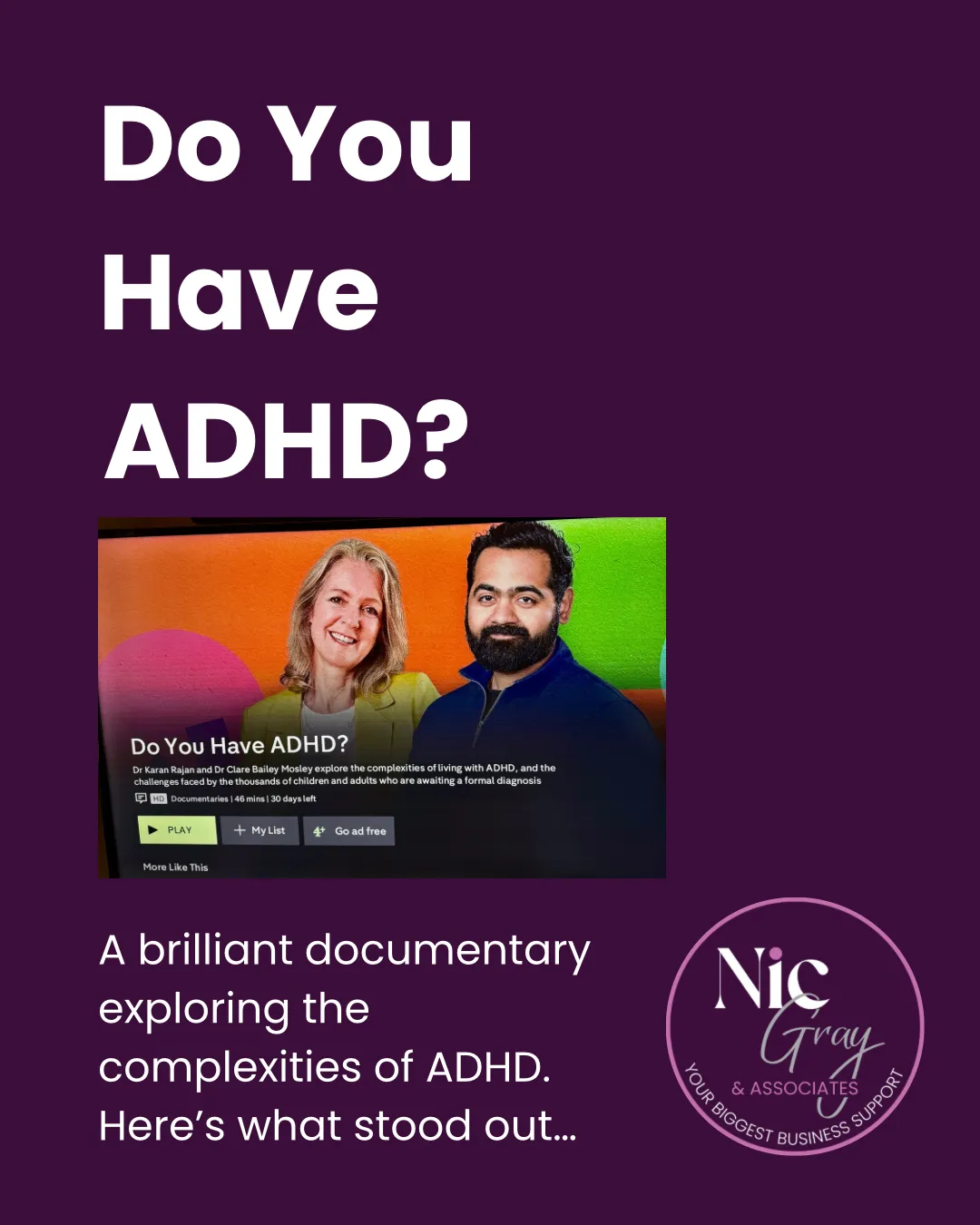
"Do You Have ADHD?" - Key Takeaways from a Powerful Documentary
"Do you have ADHD?" - A Refreshing Look at Neurodivergence, Diagnosis, and Support
Recently, I watched a fantastic documentary titled Do You Have ADHD? featuring Dr Karan Rajan and Dr Clare Bailey Mosley. It explored the complexities of living with ADHD and the challenges faced by thousands of adults and children awaiting a formal diagnosis.
What stood out most was the shift in narrative. ADHD was described not just as a disorder, but as a dopamine deficiency. This framing helps move away from shame and toward understanding how our brains function differently.
Common ADHD Traits in Childhood
The documentary highlighted some typical signs of ADHD in children:
Running around more than other children
Constantly getting up and down from the table
Forgetting things like school bags or PE kits
Saying things without thinking
Describing themselves as hyper or fidgety
Expressing that they have "too many things" in their heads
These behaviours are often brushed off as naughtiness or inattention, but they can be early signs of neurodivergence.
Rather than simply calling it a behavioural disorder, the programme emphasised that ADHD stems from challenges in the brain’s dopamine system, affecting motivation, memory, and attention regulation.
Think You Might Have ADHD?
Here’s where to start:
Download the ADHD screening form from the World Health Organisation (WHO).
If you meet the minimum criteria, the next step is to speak to your GP.
It's important to be cautious with social media self-diagnosis. While relatable content can be validating, only a trained professional can confirm an ADHD diagnosis.
What Happens During an ADHD Assessment?
An ADHD assessment typically focuses on three core areas:
Inattentiveness
Focus, memory, and organisation
Related to the brain's "default mode network"
Hyperactivity & Impulsivity
Risk-taking behaviours
Linked to dopamine and norepinephrine regulation
3. Impairment
Is it affecting your life?
Impact on friendships, finances, conflict, daily tasks like cooking and cleaning
Life After a Diagnosis
A formal diagosis can be deeply validating. It helps many people make sense of their experiences, habits, and challenges.
But it's also common to feel grief over what could have been. The years spent not knowing, not understanding, or being misunderstood.
Support Is Available, Diagnosis or Not
Whether you have a diagnosis or not, support is available to help you thrive:
ADHD Coaching
Therapy
Body Doubling for productivity and focus
You're not along and you don't need to wait for a diagnosis to start building systems that work for your brain.
Your Inner Knowing
Ultimately, the most important part of this journey is understanding yourself. Finding where your peace lies and learning to trust your inner knowing.
That's exactly where I can support you.
If this resonates, and you're looking for compassionate support on your ADHD journey, you can learn more about my coaching at https://nicgray.co.uk

